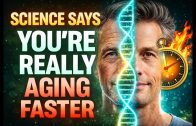








Your Body Has a Secret Age — Science Says You’re Aging Faster or Slower Than You Think #shorts
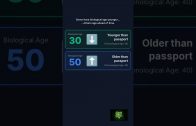
Your passport shows your age — but science says that number might be lying.
In this documentary-style video, we explore the shocking truth behind biological age and how fast your body is really aging. Backed by real scientific research from Harvard, Stanford, and leading longevity scientists, this video explains how lifestyle, stress, sleep, diet, and daily habits can make your body age faster — or slower — than time itself.
Modern studies prove that biological aging is measurable, influenced by inflammation, DNA damage, telomere length, and epigenetic clocks. Even more surprising — science shows that certain habits can slow down biological aging, and in some cases partially reverse it.
This is not motivation.
This is real science.
If you’re interested in longevity, health, human biology, and the hidden systems that control aging, this video is for you.
👉 Watch until the end to understand what truly determines how old you are.
👉 Follow the channel for more science-based storytelling.
👉 Comment below: do you believe biological age matters more than calendar age?
Video:
Your body is aging right now.
But how fast it ages depends less on time — and more on how you live.
Scientists now agree on one thing: biological age can be influenced.
This isn’t motivation.
This is biology.
Researchers from Harvard, Stanford, and the National Institute on Aging have identified key mechanisms that control how fast the human body deteriorates. These mechanisms are measurable, predictable, and — most importantly — modifiable.
Let’s start with what aging really is.
Aging is not just wrinkles or gray hair. It’s the gradual loss of cellular function. Over time, cells accumulate damage, stop communicating properly, and lose the ability to repair themselves.
One of the main drivers of aging is chronic inflammation. Dr. David Sinclair, a Harvard geneticist, explains that long-term low-grade inflammation accelerates DNA damage and shortens cellular lifespan.
To slow this process, scientists recommend regular movement — not extreme workouts, but consistent physical activity.
Studies show that people who walk, cycle, or perform moderate exercise at least 150 minutes per week have significantly lower biological ages. Exercise activates enzymes that repair DNA and improves insulin sensitivity, both critical for longevity.
Next comes sleep.
According to neuroscientist Dr. Matthew Walker, sleep is when the brain and body perform deep maintenance. During deep sleep, the body clears toxic waste, repairs cells, and regulates hormones tied to aging.
Chronic sleep deprivation increases cortisol, damages the immune system, and accelerates biological aging markers. Scientists recommend 7 to 9 hours of consistent sleep — not occasionally, but habitually.
Then there is nutrition.
Aging is strongly influenced by oxidative stress — damage caused by unstable molecules called free radicals. Diets rich in vegetables, fruits, healthy fats, and lean proteins help neutralize this damage.
Multiple studies confirm that diets similar to the Mediterranean diet are linked to slower biological aging and reduced risk of age-related diseases.
Another powerful factor is stress.
Psychologist Dr. Elissa Epel discovered that chronic psychological stress shortens telomeres — protective caps at the end of DNA strands. Shorter telomeres are associated with faster aging and earlier disease onset.
Stress management techniques like mindfulness, controlled breathing, and even regular time in nature have been shown to preserve telomere length.
Surprisingly, social connection also plays a role.
Long-term studies, including the Harvard Study of Adult Development, reveal that people with strong social relationships live longer, age slower, and maintain cognitive function better than those who are isolated.
Loneliness, scientists warn, is as damaging to biological aging as smoking.
Finally, researchers emphasize purpose.
People who feel their lives have meaning show lower inflammation levels and better biological aging profiles. Purpose influences behavior, hormone balance, and long-term health choices.
Aging is not one single switch.
It’s a system.
And every system responds to input.
You may not control the year you were born —
but you influence how your body experiences time.
If you want more science-based stories about longevity, health, and the hidden biology shaping your life, follow this channel.
And comment below:
Which habit do you believe has the biggest impact on staying young?
#biologicalage #scienceshorts #healthshorts #documentaryshorts #viralscience